
The grocery store has spent more than a century reinventing itself. Self-service aisles replaced clerk-filled orders, supermarkets brought food categories under one roof and digital fulfillment transformed the neighborhood store into an omnichannel hub. Each change has influenced how people shop, how retailers operate and why grocery-anchored shopping centers remain central to the communities they serve.
- 01From specialty shops to self-service grocery
- 02The rise of the modern supermarket
- 03How grocery-anchored shopping centers changed retail
- 04Warehouse clubs, supercenters and value formats
- 05The arrival of omnichannel grocery
- 06What defines the modern grocery store
- 07The next evolution of grocery retail
- 08Frequently asked questions
Key takeaways
Convenience has shaped every major era of grocery retail, from early home delivery and self-service aisles to curbside pickup and app-based ordering.
The supermarket combined selection, value, self-service and scale, establishing a model that transformed consumer behavior and retail development.
Grocery anchors support repeat visits that can benefit restaurants, services and retailers positioned around the same recurring community trip.
Omnichannel grocery has not eliminated the store. It has expanded the store's role as a shopping destination, pickup point and local fulfillment hub.
The next era of grocery will combine value, private-label growth, fresh and prepared food, artificial intelligence, personalized offers and flexible fulfillment while keeping the physical store at the center of the experience.
Grocery retail is sometimes treated as a business that changes slowly. The product at its center is an everyday necessity and many parts of the weekly grocery trip feel familiar across generations. Look closer, however, and grocery is one of retail's most consistent innovators.
Each stage of its evolution has made shopping faster, more accessible or more relevant to the customer. Those changes have also shaped the physical environment around the grocery store. What began as a collection of specialized merchants ultimately became the modern supermarket, the grocery-anchored neighborhood center and, more recently, an interconnected experience spanning the aisle, the app, the parking lot and the customer's front door.
Understanding how that evolution happened helps explain why the grocery store remains so important to the future of physical retail.
From specialty shops to self-service grocery
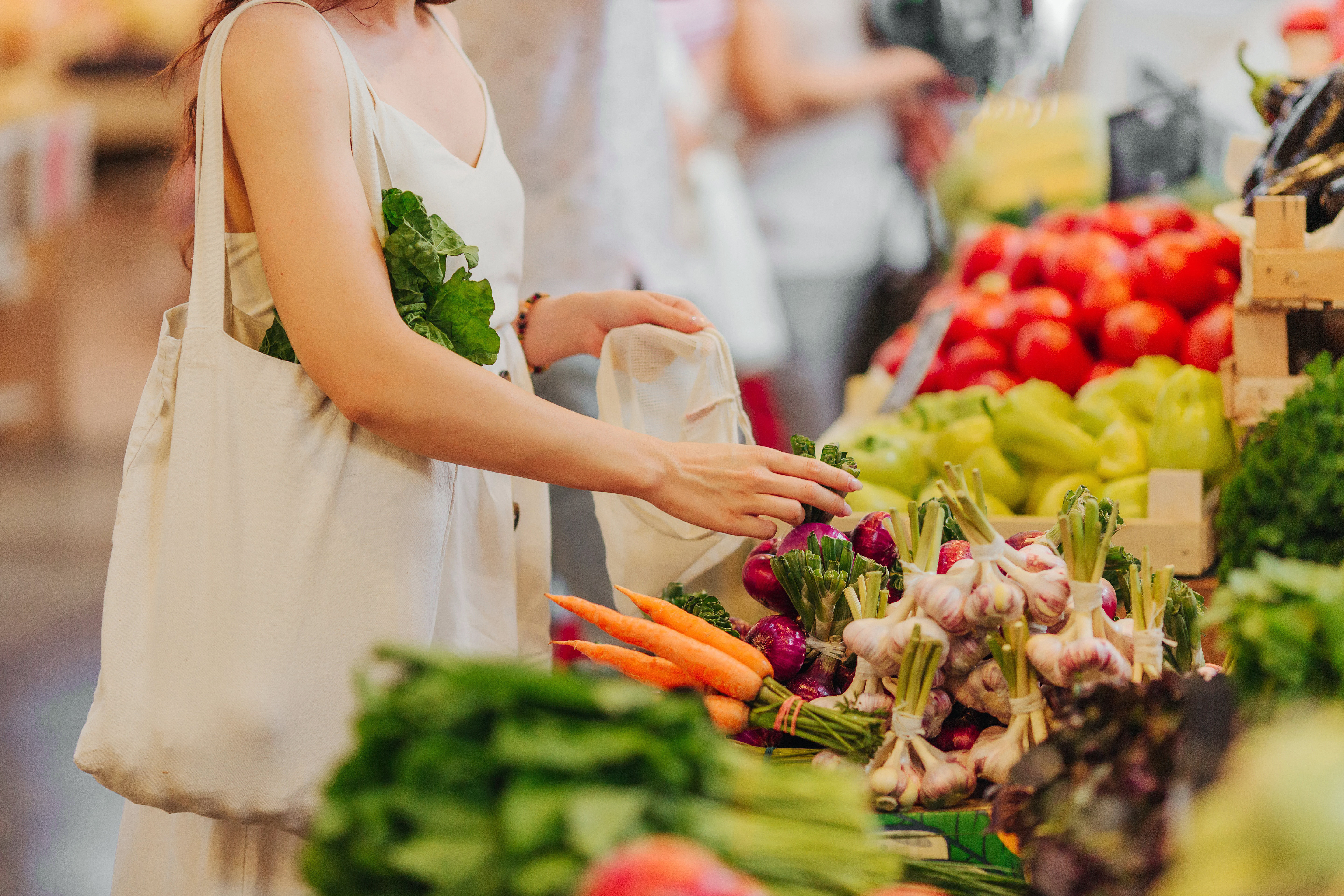
Before the modern grocery store, buying food often required several separate stops. Customers might visit a baker for bread, a butcher for meat and a greengrocer for produce. Dry goods and shelf-stable products were sold from smaller shops where merchandise was commonly stored behind a counter.
Instead of selecting products directly, a shopper gave an order to a clerk who gathered and packaged the items. Some merchants sold on credit and offered home delivery, making two ideas that feel highly current today part of grocery retail long before mobile apps and digital payments.
As cities grew and distribution networks improved, chain operators began bringing greater consistency to pricing, inventory and store operations. Standardized packaging also helped products travel farther, remain protected and become recognizable to shoppers.
The most important change came when retailers began handing control of product selection to the customer. Clarence Saunders opened Piggly Wiggly in Memphis in 1916 and advanced a self-service model that allowed shoppers to walk through the store, compare packaged products and make their own selections.
Self-service changed more than store operations
Once customers could choose products directly from shelves, packaging, product placement, pricing and brand recognition became more important. The aisle became a place where products competed for the shopper's attention.
That basic interaction still shapes grocery merchandising today.

The rise of the modern supermarket
Self-service provided the operational foundation, but the supermarket established the scale of the modern grocery experience.
King Kullen opened in Queens, New York, in 1930 and became closely associated with the development of the modern supermarket model. Its approach combined multiple food departments, self-service, discount pricing, chain marketing and high-volume operations in one location.
Several changes in American life helped the format succeed. Household refrigerators made it practical for families to store more perishable food. Improvements in packaging helped products remain fresh. Growing automobile ownership allowed customers to travel farther and carry larger purchases home.
The result was a new kind of grocery trip. Instead of making several small stops, customers could purchase produce, meat, dairy, household essentials and packaged food in one place.
The grocery innovation timeline
- 1916Piggly Wiggly advances the self-service grocery model in Memphis.
- 1930King Kullen opens in Queens and helps establish the modern supermarket format.
- 1950sGrocery-anchored shopping centers expand alongside suburban communities.
- 1976Price Club introduces a membership-based warehouse model.
- 1988Walmart opens its first Supercenter, combining general merchandise with a full grocery store.
- 2017Amazon acquires Whole Foods Market, drawing new attention to the connection between digital capabilities and physical grocery locations.
- 2020sCurbside pickup, delivery and integrated loyalty programs make omnichannel shopping an expected part of the grocery experience.
The expansion of national and regional grocery chains brought greater standardization, but it did not make every store identical. Grocery has always been local in important ways. Assortments, brands, fresh-food preferences and price expectations vary from one community to another. Grocers that understand those differences can combine the efficiency of scale with the relevance of a neighborhood merchant.
How grocery-anchored shopping centers changed retail
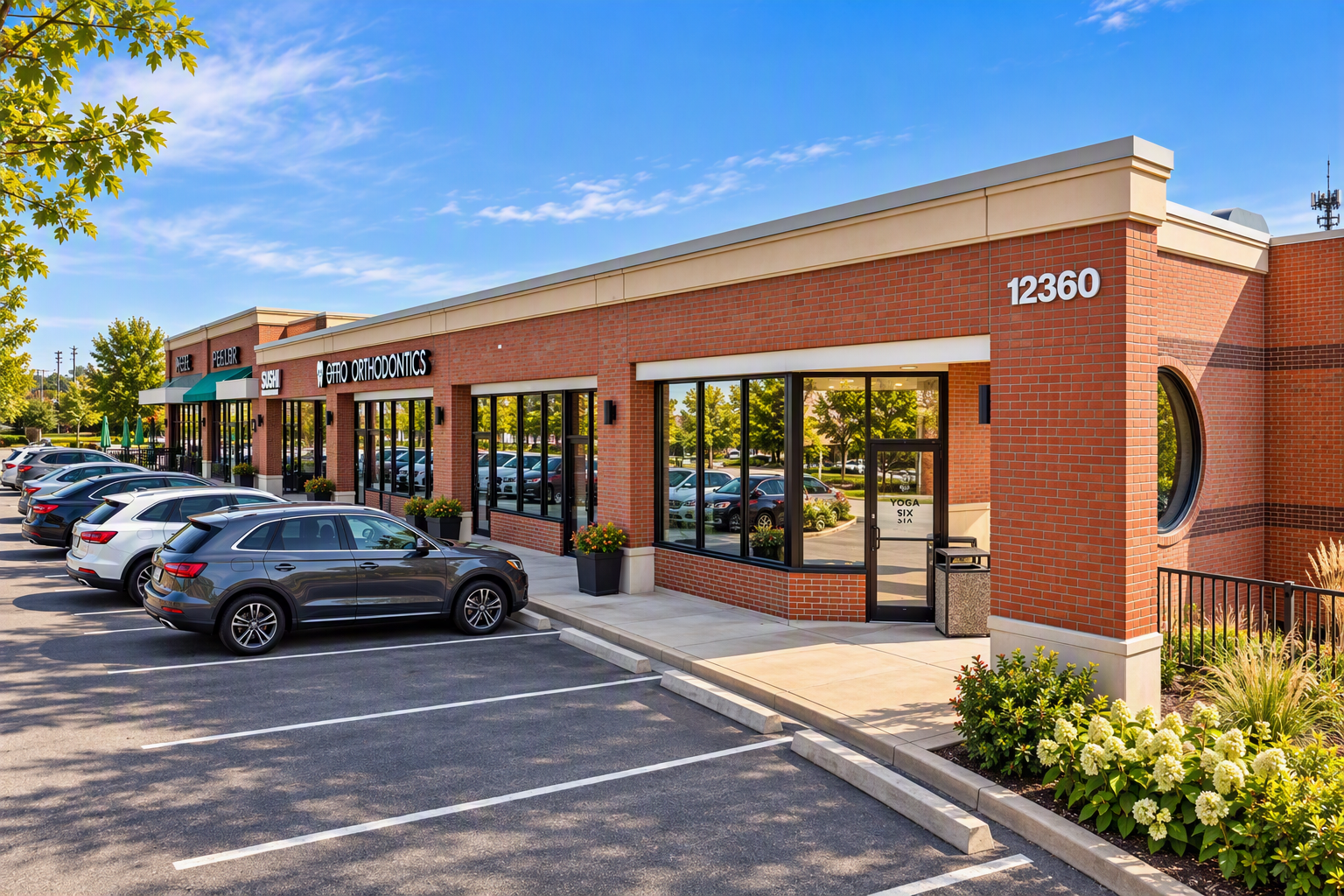
As supermarkets expanded into growing suburban communities during the middle of the 20th century, complementary businesses began locating near them. A household could purchase groceries, visit a salon, pick up dry cleaning, eat at a restaurant or complete another errand without making several disconnected trips.
The grocery-anchored shopping center made that convenience part of the real estate itself.
For Phillips Edison & Company, this history is especially relevant. Grocery-anchored neighborhood centers remain at the center of our work because they serve recurring needs. Customers may change where they shop, how they order or which brands they prefer, but food remains a consistent part of household life.
The grocery store has evolved repeatedly, but its community role has remained remarkably consistent. It gives people a recurring reason to return and creates opportunities for other businesses to become part of the same trip.
A grocery anchor can establish a regular traffic pattern that supports the surrounding tenant mix. Restaurants, healthcare providers, personal services and local shops benefit when their businesses are positioned near a destination customers already visit as part of their routine.

Why grocery remains a powerful anchor
Grocery trips are driven by recurring household needs rather than a single season or special occasion. That repeat behavior can create consistent opportunities for surrounding businesses to serve the same customer.
The strongest centers make the overall trip easier through a thoughtful tenant mix, clear visibility, convenient parking and services that reflect the surrounding community.
A strong center is built around the community's routine
A grocery anchor supplies a recurring reason to visit, but the complete tenant mix turns that visit into a more useful neighborhood trip. Balancing recognized brands with regional and local Neighbors helps the center address everyday needs while reflecting the character of the community it serves.
Warehouse clubs, supercenters and value formats
The second half of the 20th century brought new formats that challenged the traditional supermarket by redefining what convenience and value could mean.
Price Club introduced a membership-based warehouse model in 1976. Customers paid an annual fee for access to bulk merchandise offered in a large, operationally efficient environment. The model showed that many households would trade some elements of the traditional supermarket experience for perceived value, larger quantities and a treasure-hunt style trip. Price Club later merged with Costco, helping establish a format that remains influential.
Walmart introduced its first Supercenter in 1988, combining general merchandise with a full-scale supermarket. The format expanded the meaning of one-stop shopping by allowing customers to purchase food, household products, clothing and other merchandise during one visit.
At the same time, specialized grocery models gained ground. Natural and organic grocers appealed to shoppers interested in ingredient transparency, wellness and differentiated products. Limited-assortment grocers built streamlined operations around fewer products, private labels and strong price positioning.
Different formats, the same customer questions
Is it convenient? Customers consider how easily a grocery trip fits into their schedules, routes and other errands.
Does it provide value? Value may come from price, quality, assortment, time savings or confidence in the retailer's offerings.
Does it fit my household? Store format, package size, fresh selection and prepared food all shape the answer.
Do I trust it? Grocery retailers build relationships through product quality, availability, consistency and familiarity.
That diversity is one of grocery retail's defining strengths. There is no single format that serves every shopper, trip or community. Traditional supermarkets, warehouse clubs, discount grocers, specialty markets and supercenters can coexist because customers use them for different reasons.
The arrival of omnichannel grocery
Online ordering introduced another major change, but the evolution was not as simple as moving the grocery trip from the store to a website.
Grocers had to connect digital ordering with a physical system capable of selecting, storing and transferring products safely. Freshness, substitutions, temperature control and narrow delivery windows made grocery fulfillment different from shipping a typical e-commerce purchase.
Amazon's 2017 acquisition of Whole Foods Market brought renewed attention to the relationship between digital convenience and physical grocery locations. Digital platforms could simplify discovery and ordering, while stores supplied local inventory, fresh-food infrastructure and proximity to the customer.
The COVID-19 pandemic accelerated the use of curbside pickup and delivery. Those options became essential for many households and encouraged grocers to improve apps, pickup areas, order staging, communication and last-mile partnerships.
The store has become more useful, not less relevant
Omnichannel grocery expands the role of the physical location. A store may support traditional shopping, curbside pickup, delivery orders, returns, meal solutions and loyalty engagement from the same neighborhood site.
What an omnichannel grocery store may need to support
- Customers completing a traditional in-store grocery trip
- Employees or third-party shoppers assembling digital orders
- Dedicated space for order staging and temperature-controlled storage
- Clearly marked curbside pickup positions and safe vehicle circulation
- Delivery drivers entering and leaving without disrupting customer access
- Accurate inventory information across digital and physical channels
- Loyalty programs that recognize the customer across every touchpoint
For shopping center operators, this changes the conversation from whether people shop online or in a store to how the property supports both behaviors. Parking configuration, visibility, traffic flow and convenient access matter whether the customer is spending 45 minutes in the aisles or five minutes collecting an order.
What defines the modern grocery store
Today's grocery store is being shaped by two customer expectations that can sometimes pull in different directions: shoppers want greater value and greater convenience.
Price-conscious customers are comparing retailers, evaluating promotions and turning to private-label products. At the same time, they expect accurate inventory, flexible fulfillment, relevant offers and shopping experiences that require less time and effort.
Grocers are responding with a combination of operational technology and customer-facing improvements. Artificial intelligence can support demand forecasting, inventory planning, personalization and pricing decisions. Automation can assist with repetitive operational tasks. Electronic shelf labels and connected systems can help stores coordinate information across channels.
Food itself is evolving too. Prepared meals, grab-and-go options, health-focused products, local assortments and differentiated private labels give customers reasons to select one grocer over another. As households balance budgets, dietary needs and busy schedules, the store must help them solve more than a basic product list.
Three roles of the modern grocery store
A trusted place to select fresh food, household essentials, prepared meals and products suited to local preferences.
A neighborhood location supporting pickup, delivery, digital inventory and multiple paths between the retailer and customer.
A recurring destination that connects people with food, services, businesses and experiences close to home.
Some grocers are also expanding the experience beyond the traditional aisle. Prepared-food dining areas, cooking demonstrations, tastings, nutrition services and seasonal events can encourage customers to spend more time at the store and strengthen its connection to the community.

The next evolution of grocery retail
The next phase of grocery will be shaped by technology, but technology alone will not determine which retailers succeed. The strongest innovations will be the ones that solve a clear customer problem or make store operations more effective.
Artificial intelligence is moving deeper into demand forecasting, inventory management, personalized recommendations and shopping assistance. Over time, customers may increasingly rely on digital tools to build a weekly basket, plan meals, stay within a budget or identify products that fit their dietary preferences.
Private-label products will remain strategically important because they allow retailers to differentiate their assortments while addressing customer demand for value. Health, wellness and food-as-medicine programs may also create more personalized relationships between grocers and the households they serve.
Fulfillment will continue to become more flexible. Customers may choose a full in-store trip one week, curbside pickup the next and delivery when their schedules change. They will expect the retailer to recognize them and provide a consistent experience across each option.
Convenience will remain the foundation
The definition of convenience will keep evolving, but the customer will continue to reward grocery experiences that save time, provide confidence and fit naturally into daily life.
For retail real estate, that means location, access and a relevant mix of nearby businesses will remain important.
The history of grocery is not a story of physical retail being replaced. It is a story of the store adapting to new technology, new household patterns and new expectations.
From clerk-filled orders and early home delivery to self-service aisles, supermarkets, warehouse clubs and omnichannel fulfillment, grocery retailers have repeatedly changed how they operate while preserving their essential role. The format will continue to evolve, but the grocery store will remain deeply connected to the communities and shopping centers built around it.
Frequently asked questions
How have grocery stores changed over time?
Grocery shopping evolved from separate specialty merchants and clerk-filled orders to self-service stores, supermarkets, warehouse clubs, supercenters and omnichannel grocery platforms. Modern stores now support in-store shopping, digital ordering, pickup, delivery, loyalty programs and increasingly personalized experiences.
What was the first self-service grocery store?
Piggly Wiggly, opened by Clarence Saunders in Memphis in 1916, is widely associated with advancing the self-service grocery model. Customers could walk through the store, select packaged products from shelves and bring their purchases to a cashier rather than handing a list to a clerk.
What was the first modern supermarket?
King Kullen, opened by Michael Cullen in Queens, New York, in 1930, is commonly recognized as an early modern supermarket. Its model brought together self-service, separate food departments, discount pricing and high-volume operations in a larger-format store.
Why are grocery stores important to shopping centers?
Grocery stores address a recurring household need and can bring customers back to a center regularly. Restaurants, services, healthcare providers and retailers located nearby can benefit by becoming part of the same convenient trip.
What is a grocery-anchored shopping center?
A grocery-anchored shopping center is a retail property where a grocery store serves as the primary anchor. The surrounding tenant mix commonly includes restaurants, personal services, healthcare providers, fitness concepts, financial services and local or national retailers that complement the grocery trip.
What is omnichannel grocery retail?
Omnichannel grocery retail connects the physical store with digital shopping options. Customers may browse or order through an app or website and then choose in-store shopping, curbside pickup or delivery. Inventory, loyalty information and customer service are coordinated across those channels.
How is artificial intelligence used in grocery stores?
Grocery retailers can use artificial intelligence to support demand forecasting, inventory planning, pricing, product recommendations, personalized offers and operational decisions. Emerging applications may also help customers plan meals, build baskets and shop according to a budget or dietary preference.
Grow alongside the grocery trip
Phillips Edison & Company owns and operates grocery-anchored neighborhood shopping centers across the country. Explore available space and find a location that connects your business with the recurring traffic, convenience and community relevance of the grocery-anchored experience.