
Five categories are driving the majority of new leasing conversations across our portfolio right now: value retail, quick-service restaurants, medtail, wellness and personal care, and AI-enabled store operations. Here is what our National Accounts team is seeing on the ground, and what it means if you are planning your next round of expansion.
In This Article
- 01Value retail is scaling into the suburbs
- 02Quick-service restaurants and the outparcel race
- 03Medtail has become an anchor category
- 04Wellness, beauty, and the service-tenant shift
- 05AI is changing store operations, not store counts
- 06Frequently asked questions
Key takeaways
Value retail has moved beyond urban markets. Discount and variety retailers are expanding into suburban trade areas, where grocery-anchored neighborhood centers give them daily traffic and convenient access to shoppers.
Urban-native quick-service brands are refining smaller formats and chasing suburban households, while established chains compete hard for outparcel positions.
Medtail has moved from curiosity to core category. As healthcare providers look to get closer to patients, more of them are opening in neighborhood retail centers where convenience and daily traffic are already built in.
Service-oriented tenants crossed a threshold in 2025, accounting for more than half of all retail leasing activity nationally for the first time.
AI is reshaping how stores run rather than how many stores open. Voice ordering, inventory systems, and kitchen display integration are changing the operational requirements tenants bring to a space, which in turn changes what they need from a landlord.
I spend most of my week talking to retailers about where they want to be next. Those conversations have shifted noticeably over the past eighteen months, and not in the direction a lot of people predicted a few years ago.
The categories driving demand in our centers are not the ones that dominated headlines during the height of the e-commerce conversation. They are everyday, convenience-driven, service-heavy concepts that need to be physically near the customer to work at all. Here is what our National Accounts team is watching.
Value retail is scaling into the suburbs
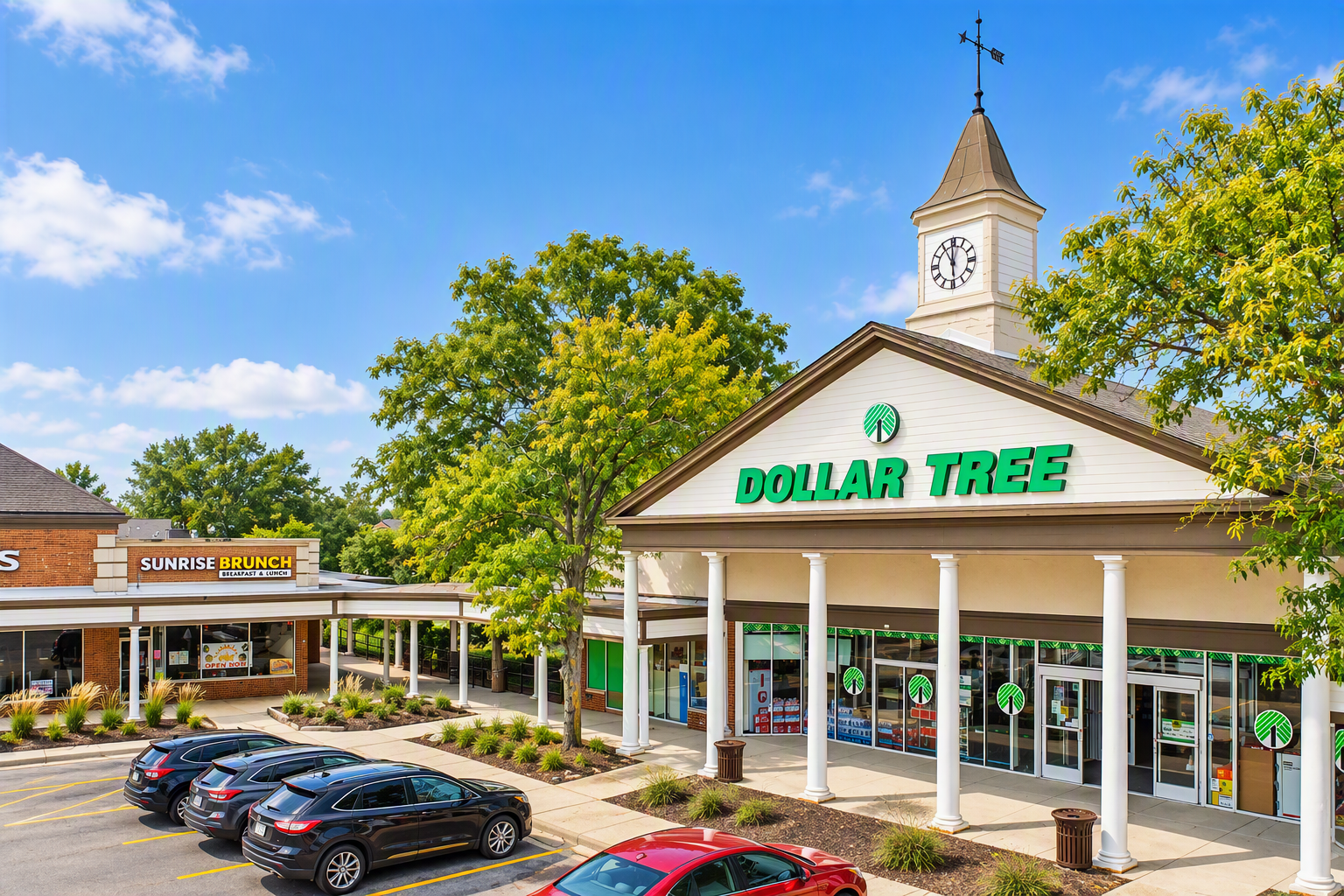
Value and variety retail has been one of the most consistent sources of demand in our portfolio, and the tenant profile has changed. These aren't the discount formats of a decade ago. Today's value retailers are design-forward and tightly merchandised, and customers treat them as destinations in their own right.
These retailers are also more disciplined about growth. Many now care more about how well each store performs than about how many stores they open. That's a good sign for landlords because it means every real estate decision gets a closer look. When a value retailer picks a site, it expects that location to perform over the long term.
What makes the category work in a grocery-anchored center is the trip pattern. A customer who already comes to the center every week for groceries will add a value retail stop without a second thought. The purchase is low-consideration and high-frequency, which is exactly the behavior a neighborhood center is built to capture.
Why value retail fits grocery-anchored centers
These concepts typically need 5,000 to 8,000 square feet, strong visibility, and easy surface parking. They do not need to be the reason a customer visits, which is the point. They convert existing traffic rather than generating their own, and that makes them a strong complement to a grocery anchor rather than a competitor for the same trip.
The best performers sit in the same sightline as the anchor, not tucked around a corner.
Quick-service restaurants and the outparcel race
Quick-service is one of the most active categories in neighborhood retail, and the conversation is often less about rent than about position.
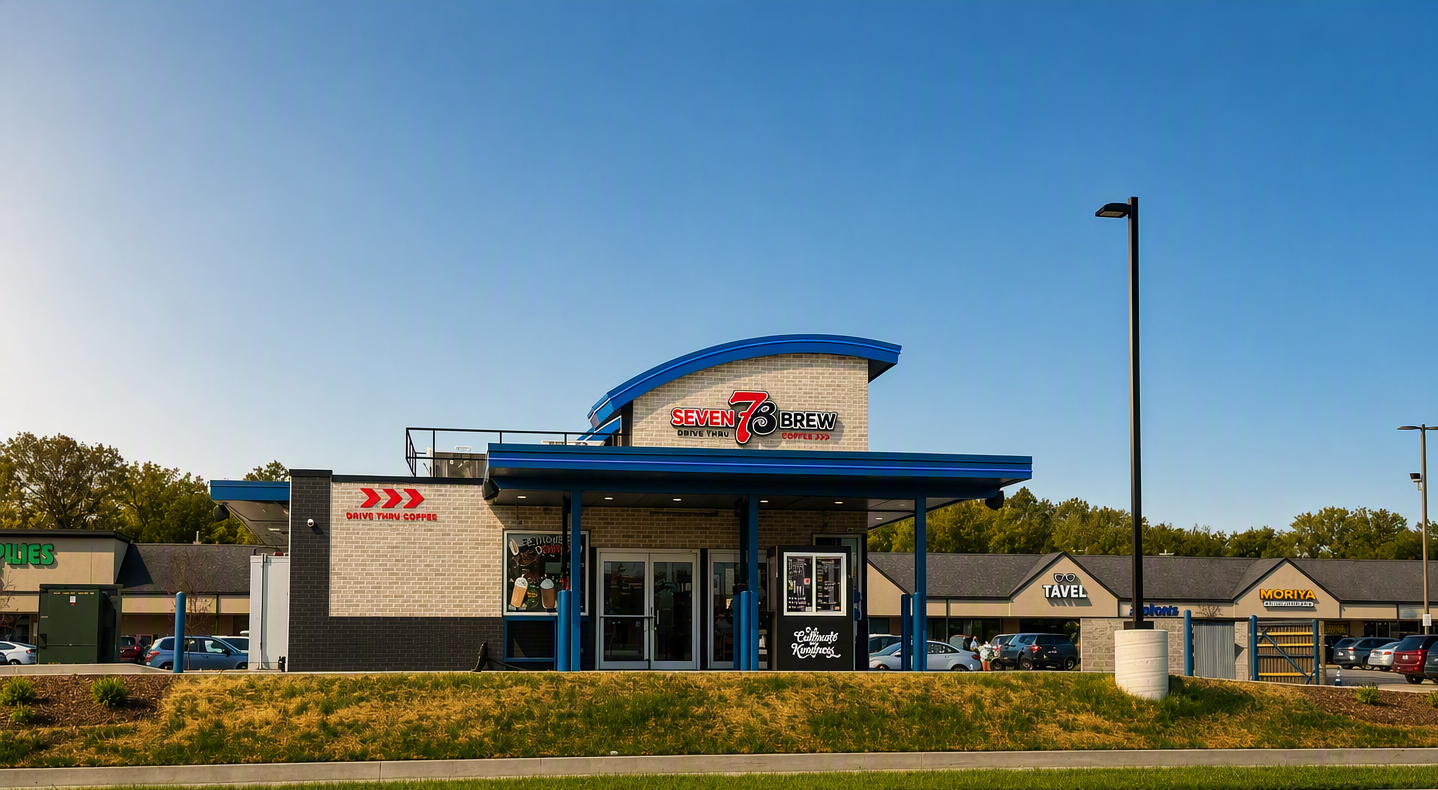
Well-located outparcels remain in high demand. A pad with a functional drive-thru lane, easy ingress and egress, and clear visibility from the main corridor stands out to operators. National chains continue to pursue these sites, and newer coffee, beverage and chicken concepts have become a growing part of the mix.
Brands that started in dense city markets are also changing. Many have developed smaller, more efficient formats that work in suburban neighborhoods. As work patterns have shifted and more people spend part of the week closer to home, these operators are going where their customers already are, and grocery-anchored centers put them there.
The outparcel conversation used to be about whether a drive-thru was possible. Now it is about stacking depth, lane geometry, and whether the site can handle a second order point. Operators are underwriting throughput before they underwrite rent.
Alongside the larger chains, specialty sweets and beverage concepts continue to expand at pace. Cookie makers, specialty soda and lemonade shops, and dessert-forward brands have found that a small footprint in a center with reliable evening and weekend traffic can perform well above what the square footage would suggest. These are impulse categories, and they perform best when they are located in the path of an existing trip.
What operators are underwriting now
Drive-thru viability has become a technical conversation. Operators want to know stacking capacity, whether the lane can support dual ordering lanes, how the site handles peak-hour queueing without spilling into the main drive aisle, and whether mobile order pickup can be separated from the drive-thru entirely.
Centers that can answer those questions with specifics move to the front of the line. Centers that cannot often lose the deal to a site that can, even when the rent is competitive.
Medtail has become an anchor category
Not long ago, a dental office or an urgent care in a shopping center was simply a nice addition to the tenant mix. Today medtail is a core leasing category in neighborhood retail, and the reasons are structural.
Traditional medical office space has been hard to come by in many markets, and new construction hasn't always kept up with patient demand. Many providers who need space are looking to retail instead.
Consumer behavior is pulling in the same direction. More patients now approach healthcare the way they approach other services. They look for convenience, easy parking, walk-in availability and clearer pricing. For routine and everyday care, a clinic on an end-cap with pylon signage and parking right outside the door can be far more appealing than a hospital campus with a parking garage.
Medtail tenants behave differently than traditional retail
A physical therapy practice or imaging center invests heavily in tenant improvements, builds a local patient base, and develops a referral network tied to a specific address. That combination produces longer terms and materially higher renewal rates than most retail categories. The tradeoff is limited co-tenancy benefit, which is why the category works best as part of a mix rather than as the whole strategy.
The categories expanding most consistently are the ones telehealth cannot replace and patients visit frequently: physical therapy, dental, chiropractic, optometry, pediatric and developmental therapy, and veterinary. Those uses require the patient to physically show up, often on a recurring schedule, which is the same behavior pattern that makes a grocery anchor valuable.
What medtail tenants ask us about
- Plumbing and electrical capacity for exam rooms, imaging equipment, or treatment suites
- ADA-compliant access and restroom configuration
- Parking ratios and proximity of spaces to the suite entrance
- Pylon and building signage rights, which function as ongoing patient acquisition
- Permitted use language broad enough to cover their full scope of services
- Neighboring tenants, since some operators are sensitive to adjacency with food uses
Wellness, beauty, and the service-tenant shift
The broader story behind medtail is the rise of service tenants in small-format retail. Service-oriented concepts now make up a growing share of neighborhood center leasing, and the shift looks more like a lasting change in how people use these centers than a short-term cycle.
Wellness and personal care are at the center of it. Med spas, aesthetics providers, recovery and IV therapy concepts, boutique fitness, and specialty beauty retail have all expanded their footprints, especially in suburban trade areas where shoppers continue to invest in self-care.
Three things these tenants have in common
Appointment-based and repeat by design, which aligns with the weekly rhythm a grocery anchor already creates.
Typically 1,500 to 4,000 square feet, which lets a center absorb several without cannibalizing one another.
High buildout investment and a location-tied client base mean these operators renew rather than relocate.
How we think about merchandising service tenants
Stack the trip. A customer who visits for groceries, a workout, and a blowout in the same stop is worth more to every tenant in the center than three separate single-purpose visits.
Watch the daypart. Service tenants skew toward evenings and weekends. A center weighted entirely toward daytime uses will underperform for them.
Protect the mix. Exclusivity language matters more in this category than in general retail, because the trade areas are tighter and the services are more directly substitutable.
Mind the parking. Appointment-based businesses create predictable peak loads. That is manageable, but only if it is planned for.
AI is changing store operations, not store counts
As artificial intelligence changes how stores operate, it's also changing what tenants need from the spaces they lease.
Quick-service is one of the clearest examples. A number of national chains are testing or rolling out AI-powered voice ordering at the drive-thru. Similar tools are also showing up in kitchen display systems, digital menu boards and throughput tracking.
None of that reduces the need for well-located real estate. If anything, it raises the stakes on site quality. Technology that shortens order times only pays off if the lane can physically keep cars moving.
What AI adoption means for a center
Tenants deploying these systems come to the table with sharper infrastructure requirements: reliable high-capacity connectivity, power for additional equipment, and site plans that support separate mobile-order pickup or a second order point. Those are questions about the building and the parcel, not about software.
The centers that can answer them are winning deals against sites with comparable demographics.
On the retail side, AI is showing up in inventory management, demand forecasting and localized assortment. For landlords, the practical result is that tenants have clearer visibility into how a specific location is performing and why. That cuts both ways. Retailers can spot which stores need attention sooner, but they can also spot the ones worth expanding, and conversations about renewals and relocations are becoming more data-driven.
We merchandise centers for the trip, not the category
Every one of these trends points the same direction: customers are consolidating errands into fewer, closer, more frequent trips. Our job is to build a tenant mix where a grocery run, a therapy appointment, a coffee, and a haircut can happen in one stop. When that works, each tenant benefits from traffic the others generate.
Frequently asked questions
What is medtail?
Medtail refers to healthcare services delivered from a retail environment, typically a shopping center or strip center rather than a hospital campus or medical office building. Common examples include urgent care, physical therapy, dental practices, imaging and diagnostics, optometry, pediatric therapy, and veterinary clinics. Med spas and wellness concepts are often grouped into the category as well.
Why are healthcare providers moving into shopping centers?
Two forces are pushing in the same direction. Supply of purpose-built medical office space is tight, with occupancy in the 93 to 94 percent range and new construction lagging demand, so providers are looking at alternative space. At the same time, patients increasingly choose providers based on convenience, and a retail storefront offers surface parking at the door, pylon signage, and proximity to errands they are already running.
What retail categories are growing fastest in grocery-anchored centers?
Across our portfolio the most consistent demand is coming from value and variety retail, quick-service restaurants, medtail and healthcare services, and wellness and personal care concepts. What connects them is trip frequency. Each one benefits from being positioned in the path of a customer who is already visiting the center for groceries.
Are service tenants replacing traditional retail in shopping centers?
Not replacing, but they are taking a growing share of small-format space. Traditional retail still plays an important role, but a well-merchandised center today looks different than it once did. There's more emphasis on uses that bring customers to the property in person, such as healthcare, wellness, fitness and personal care.
How is AI affecting brick-and-mortar retail real estate?
Primarily through operations rather than store count. Voice ordering, kitchen display integration, inventory forecasting, and localized assortment are changing how tenants run individual locations. The real estate consequence is that tenants arrive with more specific infrastructure requirements around connectivity, power, and site configuration, and with far better data on how a given location is performing.
What makes an outparcel attractive to a quick-service restaurant?
Drive-thru functionality above almost everything else. Operators evaluate stacking depth, lane geometry, whether the site supports dual order points, how queueing interacts with the center's main drive aisle, and whether mobile order pickup can be handled separately. Visibility from the primary corridor and clean ingress and egress round out the list. Rent matters, but it is rarely the deciding factor on a strong site.
Why do emerging brands choose grocery-anchored centers over standalone sites?
Because the anchor does work the tenant would otherwise have to do itself. A grocery store brings the surrounding neighborhood back to the center on a weekly or more frequent basis. For an emerging concept without established brand awareness in a market, that built-in traffic substantially reduces the cost and time required to build a local customer base.
Planning your next round of expansion?
Our National Accounts team works with growing brands across a national portfolio of grocery-anchored neighborhood shopping centers. Tell us what you are looking for and we will help you identify the trade areas, formats, and site configurations that fit your concept.